Windshield HUD Technology: What Is It and How Does It Work?
Advanced safety and driver assistance systems have become more sophisticated in recent years, with one standout technology transferring from aviation to modern cars being the HUD, or Head-Up Display, known as the display screen on the windshield.
This technology allows drivers to view important information such as speed, navigation directions, and various alerts without needing to shift their gaze to the dashboard or the infotainment screen. With its growing prevalence in an increasing number of new cars, many drivers wonder: Does HUD technology actually enhance safety while driving, or could it become an additional source of distraction?
What is HUD technology in cars?
Head-Up Display (HUD) technology is an information display system that shows important data directly in front of the driver on the windshield or on a small transparent screen dedicated for that purpose.
The primary goal of this technology is to enable the driver to monitor necessary information without the need to divert their eyes from the road. Instead of glancing at the dashboard to check speed or reviewing the navigation screen for the next turn, this information appears within the driver’s natural field of view.
Although its use has become common in modern cars, the technology originated in military aircraft, which utilized it to assist pilots in monitoring flight data while focusing on the airspace ahead of them.
How does the HUD windshield screen work?
HUD technology relies on a small projector that projects a digital image onto the windshield or a special transparent panel in front of the driver.
The display angle is adjusted so that the information appears to be suspended in the air in front of the car, allowing the driver to read the data easily without significantly changing their line of sight.
The system typically consists of:
- Data processing unit.
- Digital display device.
- Optical system to direct the image.
- Dedicated windshield or integrated transparent screen.
The display quality varies from car to car depending on screen size, resolution, brightness control options, and display positioning.
What information does HUD technology display?
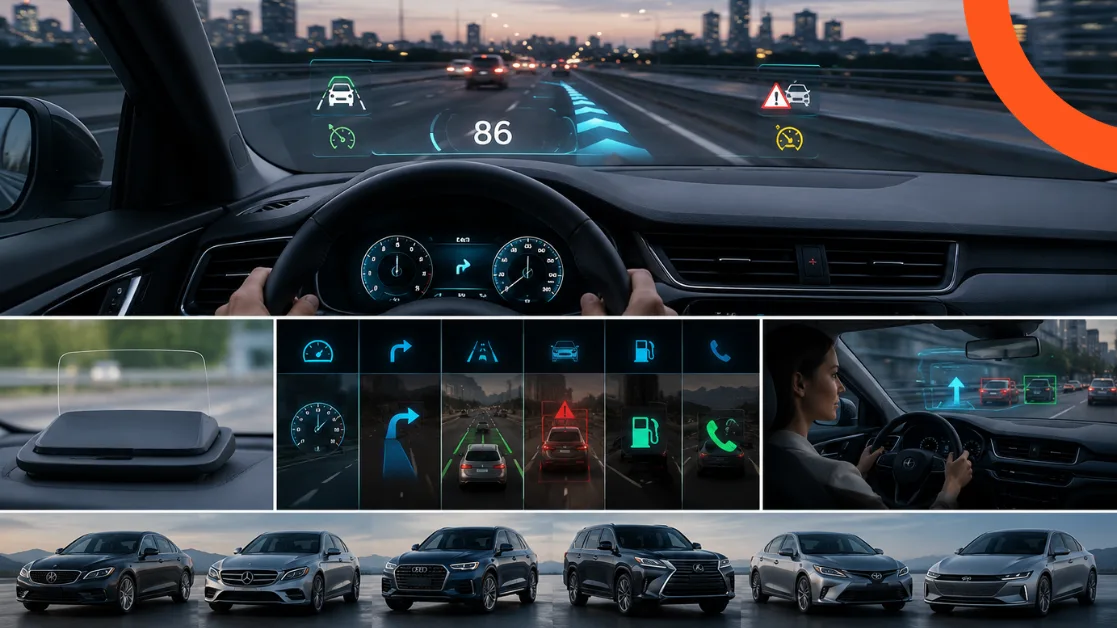
The displayed information varies by manufacturer and equipment level, but most modern systems provide a set of essential data, such as:
Current speed
Speed is one of the most common pieces of information in HUD systems, appearing clearly in front of the driver without the need to look at the gauges.
Speed limits
Some systems can read traffic signs or rely on map data to display the maximum speed allowed on the road.
Navigation instructions
The system shows upcoming road directions and the remaining distance to the next turn, making it easier to follow the route while driving.
Safety and assistance systems
May include:
- Lane departure warning.
- Forward collision warning.
- Blind spot alerts.
- Adaptive cruise control information.
Additional data
In some advanced vehicles, it can display:
- Fuel or battery level.
- Incoming call information.
- Current audio track name.
- Semi-autonomous driving system indicators.
Does HUD technology make driving safer?
Theoretically, this technology helps reduce the time a driver spends looking away from the road, which is a crucial factor in improving attention while driving.
Numerous studies indicate that head-up displays reduce eye movement between the road and the dashboard, contributing to improved response times to unexpected situations.
Additionally, some road safety research has shown that keeping essential information within the driver’s field of view helps reduce errors caused by visual distractions.
When does HUD screen become a distraction?
Despite the clear benefits of the technology, its effectiveness largely depends on the quality of the system’s design.
When a large amount of information is displayed or when a busy design with colors and symbols is used, drivers may start focusing on the screen itself instead of monitoring the road.
The issue tends to be more pronounced in the following cases:
- Excessive unnecessary alerts.
- Displaying information not needed by the driver while driving.
- Poor clarity of graphics.
- Brightness settings not suitable for the surrounding environment.
This is why leading companies rely on the principle of displaying only the minimum amount of critical information, keeping the screen as an aid rather than an additional entertainment display.
AR-HUD Technology: The New Generation of HUD Screens
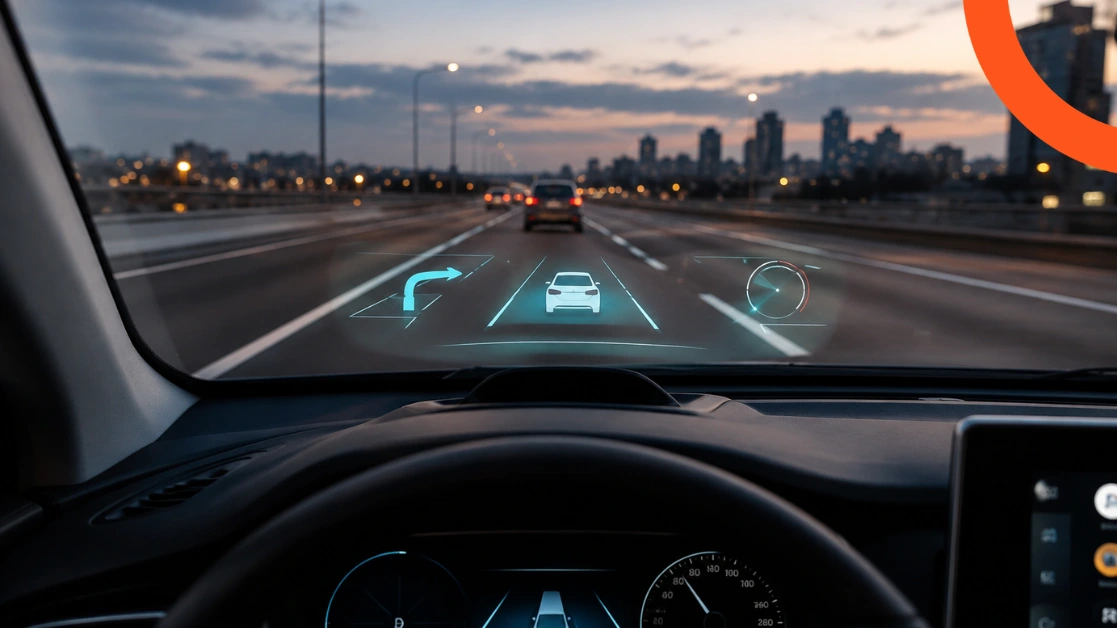
Recent years have witnessed significant advancements in head-up display systems with the emergence of augmented reality (AR-HUD) technology.
Instead of merely showing static numbers and symbols, the system integrates digital information with the real scene of the road in front of the driver.
The following are the key advantages of AR-HUD:
- Displaying navigation arrows above the actual road path.
- Identifying potential vehicles or pedestrians as sources of danger.
- Presenting speed limits in their real-world locations.
- Providing clearer information during night driving.
This technology helps make information more relevant to the real scene, reducing the need to interpret traditional symbols and enabling faster responses.
Notable Cars Equipped with HUD Technology
Head-up displays have become available in an increasing number of vehicles, whether luxury or mid-range cars.
Some of the notable cars offering this technology include:
- BMW 7 Series: Offers an advanced display screen enhanced with augmented reality along with 3D navigation information.
- Mercedes S-Class: Features an advanced AR-HUD system that integrates with safety systems and pedestrian detection.
- Audi A6 and Q7: Employ advanced augmented reality systems to display navigation and alerts in a more realistic manner.
- Lexus LX 600 and LS: Provide a HUD integrated with advanced driver assistance systems.
- Toyota Camry and Highlander: Offer HUD technology within some higher trims at more competitive prices compared to luxury vehicles.
- Hyundai Ioniq 6: Comes with a modern system that integrates driving information with advanced assistance systems.
Advantages of HUD Screens
The technology offers several important benefits for drivers, including:
- Reducing the need to look away from the road.
- Improving response times to unexpected situations.
- Facilitating navigation while driving.
- Increasing driver comfort during long journeys.
- Displaying important information directly and clearly.
Disadvantages of HUD Technology
Despite its advantages, there are some points to consider:
- High cost in some vehicles.
- Variation in system quality between manufacturers.
- Potential for distraction if the information is excessive.
- Vision can be affected in certain weather conditions or when wearing specific glasses.
- The need for acclimation to the display method initially.
Is HUD technology worth the extra cost?
This depends on your driving style.
If you drive long distances daily or heavily rely on navigation systems, a HUD screen can add real value by facilitating access to important information without distracting your attention.
However, if your driving is limited to short trips within the city and familiar routes, you may not notice a significant difference compared to traditional systems.
In general, the value of the technology increases as driving hours accumulate and modern assistance systems are used more frequently.
Future of HUD Technology in Cars
Automotive industry experts expect that head-up displays will become a standard feature in most new cars in the coming years, just as rear cameras and electronic stability systems have.
With the continued advancement of augmented reality and artificial intelligence technologies, the windshield display may evolve into an integrated platform for presenting information, guidance, and alerts in a smarter and more precise manner.
FAQs
What does HUD mean in cars?
HUD stands for Head-Up Display, a technology that displays essential driving information on the windshield directly in front of the driver without needing to look at the dashboard.
Is HUD screen safe while driving?
Yes, when designed correctly, it helps reduce distractions by keeping important information within the driver’s field of view.
Can HUD be installed in cars that don’t come with it?
Yes, additional HUD devices are available for installation after purchasing the car, but they often do not offer the same quality as factory-integrated systems.
What’s the difference between HUD and AR-HUD?
Traditional HUD displays static information like speed and navigation, while AR-HUD uses augmented reality to show information over the actual road in front of the driver.
Is HUD technology available in economical cars?
Yes, many mid-range and economical cars have started offering this technology in higher trims or as part of optional equipment packages.
Does the HUD screen work in both day and night?
Yes, most modern systems feature automatic brightness adjustment to keep information clear in various lighting conditions.
Conclusion
HUD technology is not just a cosmetic addition or luxury feature in modern cars; it has become an important tool for enhancing the driving experience and improving safety levels when used correctly.
Intelligently designed systems help drivers maintain their focus on the road by displaying essential information within their natural field of view. On the other hand, information-overloaded systems can lead to reverse outcomes and increase distractions.
As AR-HUD systems spread across more vehicles, it seems the future of driving will move towards displaying information directly in front of the driver in a clearer and more interactive way than ever before.