What Does Synthetic Oil Mean? Complete Guide
Synthetic oil is the top choice for most modern cars, thanks to its ability to protect the engine and improve performance in various driving conditions. With the spread of many types of motor oils, many drivers wonder: what does synthetic oil mean? And is its high price worth it?
In this comprehensive guide, you will learn everything you need to know about synthetic oil, starting from how it is manufactured, its properties, types, the best time to change it, and answers to the most commonly asked questions about it.

What is synthetic oil?
Synthetic oil (Fully Synthetic Oil) is a motor oil that is completely manufactured in laboratories using advanced chemical processes, rather than being simply extracted directly from crude oil as is the case with conventional mineral oils.
The molecules in synthetic oil are designed to be uniform in size and composition, giving it a higher ability to withstand heat and pressure and reduce friction within the engine compared to conventional oils.
This is why most manufacturers of modern cars rely on synthetic oils, especially in engines equipped with turbochargers or high-performance engines.
How is synthetic oil manufactured?
The manufacture of synthetic oil begins with the use of high-purity base oils, which are then chemically processed and augmented with a set of advanced additives that grant it exceptional properties, such as:
- Oxidation resistance.
- Corrosion resistance.
- Friction reduction.
- Long-lasting viscosity.
- Prevention of deposits within the engine.
- Resistance to rust and internal corrosion.
The result is a more stable and consistent oil compared to conventional mineral oils.
The most important properties of synthetic oil
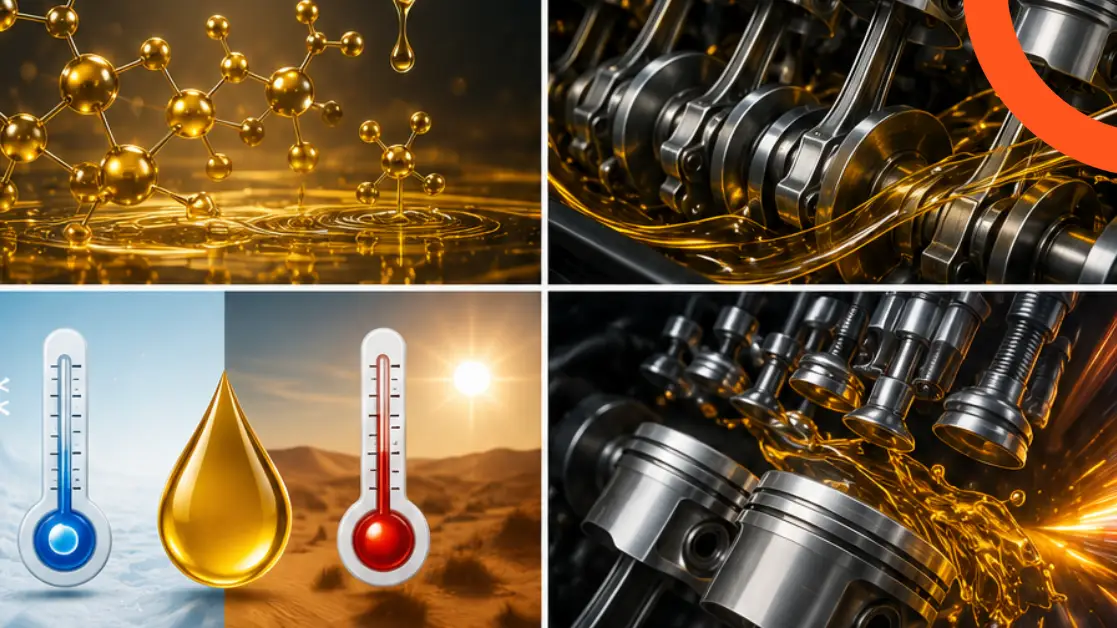
Synthetic oil possesses a set of characteristics that make it the best choice for most modern cars:
1. Resistance to high and low temperatures
Synthetic oil can work efficiently in very cold conditions or high summer temperatures without losing its viscosity or evaporating quickly.
It notably quickly reaches engine parts immediately upon starting the vehicle, reducing friction in the first few seconds when the most wear occurs.
2. Higher purity than conventional oils
Thanks to its manufacturing method, synthetic oil contains significantly fewer impurities compared to mineral oil, helping to:
- Reduce deposit and sludge formation within the engine.
- Maintain the cleanliness of engine parts.
- Extend engine life.
3. Reduced friction
The uniform particles in synthetic oil form an even protective layer between metal parts, leading to:
- Reduced friction.
- Decreased wear.
- Smoother operation.
- Increased engine lifespan.
4. Improved fuel consumption
The lower the friction within the engine, the less energy the engine needs to work, so synthetic oil helps improve fuel efficiency compared to conventional oils.
The amount of savings may vary depending on the type of vehicle, engine, and driving style.
5. Longer lifespan
One of the key advantages of synthetic oil is that it lasts longer before needing to be changed.
In most cars, its lifespan ranges from:
- 10,000 to 15,000 kilometers.
- Or at least once a year if the vehicle hasn’t reached this distance.
It is essential to always adhere to the manufacturer’s recommendations regarding oil change intervals.
Types of synthetic oils
Synthetic oils are divided into two main types:
First: Full Synthetic Oil
This is the highest quality oil and provides the most engine protection.
Advantages
- Highest resistance to heat.
- Excellent oxidation resistance.
- Maintains viscosity for a long time.
- Significantly reduces friction.
- Helps improve fuel consumption.
- Suitable for modern and sporty engines.
- Lasts up to 15,000 kilometers or more according to manufacturer recommendations.
Disadvantages
- Higher cost compared to other types.
Second: Semi-Synthetic Oil
This is a blend of mineral oil and synthetic oil.
It is considered a suitable option for those looking for a balance between price and performance.
Advantages
- Better protection than mineral oil.
- Lower price than full synthetic.
- Good performance for daily use.
Approximate lifespan
About 7,000 to 8,000 kilometers.
How to choose the right synthetic oil?
Choosing oil depends not only on it being synthetic but on several factors.
- The appropriate viscosity (such as 5W-30 or 5W-40)
- API standards like SN or SP
- ACEA standards
- Driving style (city or highways)
- Engine age
Is synthetic oil better than regular oil?
In most cases, yes. Synthetic oil offers:
- Greater protection for the engine.
- Better cleaning.
- Longer lifespan.
- Lower fuel consumption.
- More stable performance across all temperature ranges.
However, if the car is very old and has traveled hundreds of thousands of kilometers using only mineral oil, it is advisable to consult a specialized technician before switching to synthetic oil, as its cleaning properties may expose leaks that were hidden due to old deposits, not because it causes leaks itself.
Advantages of synthetic oil
The main reason for its popularity is the superior performance it offers compared to other oils.
- Reduction of internal engine wear
- Lower friction and improved operational efficiency
- Improvement in fuel consumption by 5% to 10%
- Prevention of deposits and sludge formation
- Maintenance of engine cleanliness
- Stable performance in harsh conditions
- Suitable for long journeys and continuous operation
Important analysis: The improvement in fuel consumption is not huge, but it becomes noticeable in the long run, especially with daily use.
Disadvantages of synthetic oil
Despite its advantages, it does have some limitations that should be known.
- Higher costs than other oils
- May cause minor leaks in older engines
- Possible unusual noises in very old engines
These problems usually appear in engines that have exceeded 200,000 to 250,000 km and were not accustomed to this type of oil.
Why is synthetic oil more expensive?
The higher price is due to several reasons, including:
- The use of high-quality base materials.
- Complex chemical manufacturing processes.
- Advanced additives to enhance performance.
- More rigorous quality testing.
- Longer service life.
While the initial cost is higher, the number of oil changes is fewer, which may make the long-term overall cost comparable or even lower in some cases.
When is it advisable to use synthetic oil?
Not every use requires synthetic oil, but it becomes essential in certain cases:
- Modern cars
- Turbo engines
- Driving in high heat or congestion
- Desert and dusty roads
- High-performance engines
When should synthetic oil be changed?
This depends on:
- The manufacturer’s recommendations.
- The type of engine.
- Driving conditions.
- The quality of the oil.
In general:
- From 10,000 to 15,000 km.
- Or once a year if the car has not reached that distance.
In desert environments or dusty roads or heavy use, it may be advisable to shorten the oil change interval to maintain the engine.
Examples of known synthetic oils
There are many brands that offer high-quality synthetic oils.
- Mobil 1
- Shell Helix (with GTL technology and purity exceeding 99%)
- Total
- Valvoline
- Motul
Tips to preserve oil and engine
To achieve the best performance of the engine, follow these tips:
- Use the viscosity recommended in the car manual.
- Check the oil level periodically.
- Don’t postpone changing oil once it reaches its life end.
- Change the oil filter with every oil change.
- Use original oils from trusted brands.
- If driving in dusty conditions or high temperatures constantly, consider reducing oil change intervals.
FAQs
What does fully synthetic oil mean?
It is oil made 100% in the lab from pure chemical compounds, without relying on crude oil.
What is the difference between synthetic oil and mineral oil?
Synthetic oil is purer, more stable, and lasts longer, while mineral oil contains impurities and degrades quickly.
How long does synthetic oil last before it needs to be changed?
Usually between 10,000 and 15,000 km, and it can exceed 30,000 km depending on the type.
Does synthetic oil save on fuel consumption?
Yes, it can improve fuel consumption by 5% to 10%.
Can synthetic oil be used in old cars?
Yes, but problems such as leaks or noises may arise in very old engines.
Does synthetic oil cause leaks?
It may cause minor leaks in engines that haven’t used it before, especially those with high distances.
What are the disadvantages of synthetic oils?
The main drawbacks are higher costs and its potential effects on old engines.
When should synthetic oil be changed under harsh conditions?
It is best to change it every 3,000 to 5,000 km in desert or dusty environments.
What is the difference between full synthetic and semi-synthetic oil?
Full synthetic is made entirely in the lab and has higher performance, while semi-synthetic is a blend of mineral and synthetic oil.
How do I choose the right viscosity for my car?
This is done according to the manufacturer’s recommendations and standards like 5W-30 or 5W-40.
Can synthetic oil last up to 15,000 kilometers?
Yes, if the manufacturer allows it and the oil meets the required specifications, while regularly monitoring the oil level.
Does synthetic oil get consumed over time?
Yes, it is normal for the engine to consume a small amount of oil over time, which varies depending on engine design, driving style, and condition.
Does synthetic oil increase engine power?
It does not directly increase horsepower, but it reduces friction within the engine, which helps maintain performance and improve fuel consumption efficiency.
Can you switch back from synthetic oil to mineral oil?
Technically, yes, but it is advisable to stick to the type of oil recommended by the manufacturer to ensure the best engine protection.
Summary
Synthetic oil is considered the best choice for most modern cars, providing higher engine protection, excellent heat resistance, and keeping internal parts clean, as well as lasting longer compared to mineral oil.
Although its initial cost is higher, its long lifespan and reduced number of changes, in addition to the protection it provides to the engine, make it a worthwhile investment in the long run, especially if you are looking for the best performance and longest engine life for your vehicle.