Toyota calls for standardization of spare parts among Japanese manufacturers
Koji Sato, Vice President of Toyota and President of the Japanese Automobile Manufacturers Association, urged companies in his country to replace direct competition with more collaboration, in an attempt to enhance their ability to face the accelerating Chinese automotive industry. The proposal focuses on standardizing and sharing essential parts, such as wiring harnesses, cooling components, and fasteners. This approach is expected to help large companies facing pressures, like Nissan, and smaller companies, like Mazda, to reduce costs and simplify supply chains.

A Call for Collaboration from the Ground Up
Sato introduced the idea this week of transitioning companies like Nissan and Honda from individualistic competition to building more collaborative manufacturing processes, starting from the basic components of the car. This comes at a time when the need to reduce development and production costs and increase responsiveness to market shifts is growing.
The proposal does not call for standardizing car identities or eliminating each company’s proprietary technologies, such as Honda’s VTEC system, or changing Subaru’s approach to using its engines. Instead, the focus is on sharing parts that are not directly related to the character and performance of the vehicle.
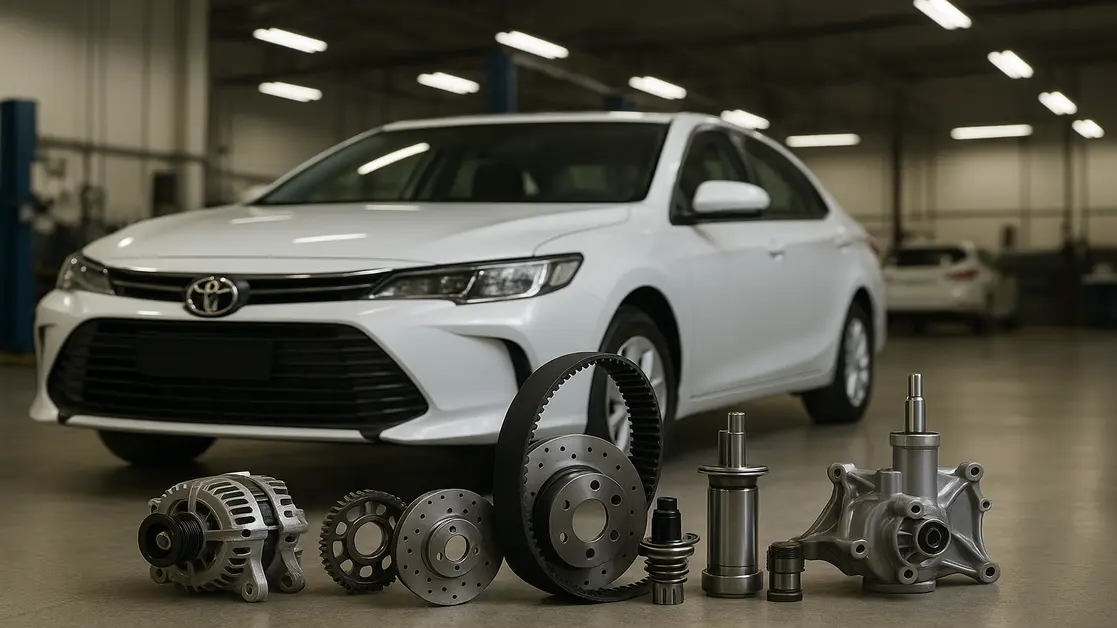
- Standardizing wiring harnesses among a larger number of companies.
- Sharing essential cooling components.
- Simplifying the use of fasteners and assembly parts.
- Reducing the complexity of supply chains and lowering development costs.
Reducing Costs and Steering Spending Toward Technology
Sato believes that adopting common components on a wider scale can alleviate the operational expenses for Japanese manufacturers. It could also allow for redirecting more research and development budgets towards software, increasing efficiency, and developing new technologies.
The sharing of parts among Japanese companies is not an entirely new concept; Mitsubishi has previously supplied several components, and parts bearing its logo appeared in Subaru vehicles, despite the historical rivalry between the two companies in rallying competitions during the 1990s and early 2000s.
Toyota Bets on Previous Collaborative Experiences
Koji Sato serves as Vice President of Toyota after stepping back from his role as CEO earlier this year. He also leads the Japanese Automobile Manufacturers Association, which includes both major and minor companies, including Daihatsu, which falls under Toyota’s umbrella.
The current call is based on historical experiences that helped Japan develop its industry over the past century. In the 1950s, Japanese industrial products were perceived as low-cost and low-quality, before the country transitioned during the period from 1960 to 1970 from niche cars like the Fairlady SPL213 to global models like the Datsun 240Z.
This shift, according to the Japanese industrial context, came after companies began to merge and simplify processes under pressure from the Japanese government, leading to the formation of larger groups capable of increasing production and improving quality simultaneously.
China Sets a Faster Pace
Japanese companies are currently facing increased pressure from Chinese manufacturers, including BYD, who have been able to develop cars at a faster rate than their Japanese counterparts. This gap highlights the importance of reducing the time and cost associated with development and production processes.
While standardizing some parts may lead to greater similarity among Japanese cars, a sector of automotive enthusiasts believes that collaboration on essential components could preserve the unique character of the models instead of weakening it, by freeing up resources necessary for developing distinctive products.
An Opportunity for Smaller Companies and Specialized Models
Companies like Mazda and Subaru may particularly benefit from this trend, given their smaller size compared to larger companies like Nissan and Honda, which are also facing market challenges. Lowering the cost of shared components could enable engineers to direct greater resources towards developing specialized models.
Examples include Mazda continuing to work on a robust alternative to the MX-5 Miata, or Subaru returning to develop the WRX STI, by reducing the burdens associated with essential components and focusing on the car’s identity and its performance.
Previous Mergers Supported Survival and Innovation
The Japanese automotive industry has previously undergone mergers and acquisitions that had an impact on the continuity of companies and the development of prominent models. Toyota acquired Hino, which led to its involvement in the development of the Hilux truck, while Nissan acquired Prince, a move later associated with the history of the Skyline GT-R.
These precedents indicate that resource standardization does not necessarily mean the disappearance of different cars or a decline in innovation, but may instead be a means to strengthen companies and provide them with greater space for investment in products that distinguish them from their competitors.
Conclusion
Through Koji Sato’s call, Toyota aims to drive the Japanese automotive industry towards a broader model of collaboration on essential parts and supply chains while maintaining the unique technologies and identities of each brand. This proposal comes in response to the rapid growth of Chinese manufacturers and may provide smaller Japanese companies with an opportunity to maintain their specialized models, while helping larger companies reduce costs and accelerate the development of new technologies.