Volkswagen Begins ID. Tiguan Production as ID.4 and ID.5 Replacement
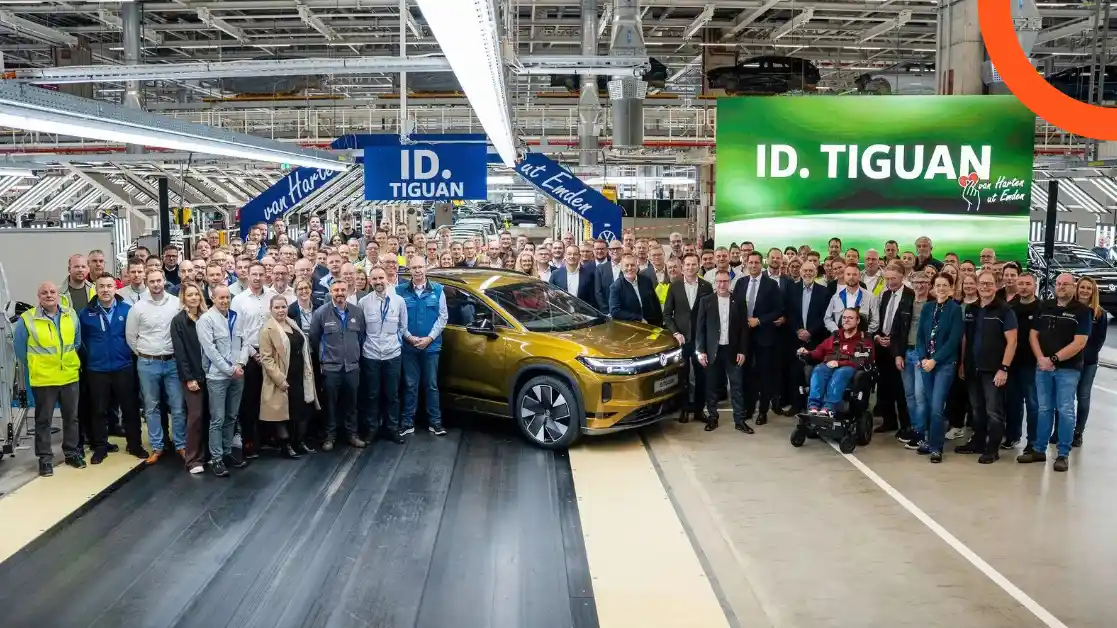
Volkswagen began production of the electric Volkswagen ID. Tiguan and revealed it in early October 2026 at the Paris Motor Show, serving as the electric alternative to the ID.4 and ID.5 models. The Volkswagen ID. Tiguan is set to officially launch in European markets in early 2027.
Browse the best Volkswagen car offers in Saudi Arabia

The Summary
- The Volkswagen ID. Tiguan electric replaces the ID.4 and ID.5 models as part of Volkswagen’s strategy to expand its presence in the electric vehicle market.
- The Volkswagen ID. Tiguan will be launched in Europe in early 2027, after being unveiled in early October 2026 at the Paris Motor Show.
- The Volkswagen ID. Tiguan offers a range of up to 600 km in the medium and long-range variants, while the 4MOTION version has a range of about 560 km.
- The price of the Volkswagen ID. Tiguan Trend in Germany starts at 42,695 euros, approximately 176,600 Saudi Riyals, while the R-Line version approaches 69,000 euros, around 285,400 Saudi Riyals.
- Volkswagen leverages the Tiguan name, which has sold over 8.3 million units worldwide, to support the transition of customers to electric vehicles.
Volkswagen ID. Tiguan Electric as an Alternative to ID.4 and ID.5
Volkswagen is replacing the ID.4 and ID.5 models with a new electric model named ID. Tiguan, a move that connects the electric vehicle with a name well-known among customers rather than relying solely on numerical designations. The Volkswagen ID. Tiguan is not a conventional version of the Tiguan converted to electric; it is a purpose-built electric vehicle.
The car is built on the developed MEB+ platform and measures 4,618 mm in length. It features a clearer SUV body with a longer and wider design than before, based on the new Pure Positive design language.
The traditional Tiguan vehicles with gasoline, diesel, and hybrid engines will continue to be displayed alongside the electric Volkswagen ID. Tiguan, maintaining the brand name across multiple powertrains during this transitional phase.
Why did Volkswagen choose the name Tiguan for the electric car?
Volkswagen chose the name Tiguan as part of a strategy to utilize trusted historical names to convince consumers to switch to electric vehicles. Volkswagen’s management, led by CEO Thomas Schäfer, believes traditional names like Tiguan are more capable of attracting customers than numerical designations like ID.4 and ID.5.
The decision is based on a large and loyal customer base that has associated with the name Tiguan over generations, as sales of the name have surpassed 8.3 million units worldwide. This step is part of a broader trend to use Volkswagen’s historical names, such as Polo, Golf, and Tiguan, in the electric era.
Key Features and Powertrains of the Volkswagen ID. Tiguan
- The base model comes with a rear electric motor producing 188 or 190 horsepower, a 58 kWh battery, and a range of up to 450 km on a single charge according to one specification.
- The base model accelerates from 0 to 100 km/h in 6.6 seconds and supports charging at a power of 105 kW, achieving a charge from 10% to 80% in 26 minutes.
- The medium and long-range versions use a rear motor producing 281 or 286 horsepower, a 77 kWh NMC battery, and a range of up to 600 km.
- The medium and long-range versions support fast charging capabilities of up to 165 kW.
- The top variant features a 4MOTION all-wheel-drive system, producing a total output of 295 or 299 horsepower, a range of up to 560 km, and a 0 to 100 km/h acceleration in 6.3 seconds.
What does the interior of the Volkswagen ID. Tiguan offer?
Volkswagen reintroduces physical buttons in the ID. Tiguan’s interior instead of relying entirely on touch controls. The interior includes a large central screen measuring 15 inches, a digital instrument panel measuring 10 inches, and a separate entertainment screen for the front passenger measuring 12 inches.
The rear trunk capacity is 534 liters, while the front trunk (Frunk) provides an additional space of 32 liters. The front trunk is designed to accommodate charging cables without taking up space in the rear trunk.
The entertainment system includes a “virtual garage” feature, allowing users to customize system interfaces with the aesthetics of legendary Volkswagen vehicles like the Golf 1 and Beetle.
Prices of Volkswagen ID. Tiguan
The price of the Trend variant of the Volkswagen ID. Tiguan in Germany starts from 42,695 euros, equivalent to about 176,600 Saudi Riyals. The higher R-Line variant is close to 69,000 euros, equivalent to about 285,400 Saudi Riyals, and includes all-wheel drive, the larger battery, and a full luxury package.
Numbers and Data
| Item | Data |
|---|---|
| Platform | MEB+ |
| Length | 4,618 mm |
| Base model battery | 58 kWh |
| Base model range | Up to 450 km |
| Medium and long-range model battery | 77 kWh NMC |
| Medium and long-range model range | Up to 600 km |
| 4MOTION version range | Up to 560 km |
| Rear trunk capacity | 534 liters |
| Front trunk capacity (Frunk) | 32 liters |
| Trend variant price in Germany | 42,695 euros, approximately 176,600 Saudi Riyals |
| R-Line variant price in Germany | About 69,000 euros, approximately 285,400 Saudi Riyals |
Volkswagen ID. Tiguan Competition in the Electric Vehicle Market
The Volkswagen ID. Tiguan competes directly with electric SUVs from China, South Korea, and Japan, with varying prices, ranges, and equipment among these models. The price of the XPeng G6 starts from around 183,100 Saudi Riyals, with a range of up to 570 km and extensive standard equipment with advanced charging architecture.
The price of the BYD Sealion 7 starts from around 201,600 Saudi Riyals, described as BYD’s first SUV with 800-volt architecture in Europe, offering a level of luxury and charging speed that surpasses the average figures of the ID. Tiguan.
Prices for the Kia EV5 start at around 193,200 Saudi Riyals, providing a battery capacity of 81.4 kWh and a range of up to 530 km. The price of the Hyundai Ioniq 5 starts from around 195,300 Saudi Riyals, while the price of the updated Toyota bZ4X starts at around 180,600 Saudi Riyals, with a battery capacity of up to 73.1 kWh and a range of 569 km.
The Strategic Background for Using the Name Tiguan
Volkswagen is betting on the historical strength of the name Tiguan to bring electric vehicles closer to traditional customers, instead of limiting electric expansion to numerical names like ID.4 and ID.5. This comes as part of a broader strategy to repurpose names like Polo, Golf, and Tiguan in electric era products.
The Volkswagen ID. Tiguan is set to be available alongside gasoline, diesel, and hybrid versions of the Tiguan, maintaining the name’s presence in showrooms across multiple powertrain options.
FAQs
Why did Volkswagen choose the name ID. Tiguan instead of ID.4 and ID.5?
Volkswagen chose the name Tiguan to leverage the trust associated with the name and its loyal customer base, to make electric vehicles more acceptable to traditional customers compared to numerical designations.
When will the electric Volkswagen ID. Tiguan be launched in European markets?
The electric Volkswagen ID. Tiguan is set to officially launch in European markets in early 2027.
Will Volkswagen stop producing traditional Tiguan models?
No, the Tiguan models with gasoline, diesel, and hybrid engines will continue to be displayed alongside the electric version.
What is the range of the Volkswagen ID. Tiguan electric vehicle?
The medium and long-range variant has a range of up to 600 km, while the base model can reach up to 450 km, and the 4MOTION all-wheel-drive version can reach up to 560 km.
What is the price of the Volkswagen ID. Tiguan in Germany?
The price of the Trend variant starts from 42,695 euros, approximately 176,600 Saudi Riyals, while the price of the higher-equipped R-Line variant approaches 69,000 euros, approximately 285,400 Saudi Riyals.
Summary of the News
The electric Volkswagen ID. Tiguan offers a new approach to replace ID.4 and ID.5 with a historically more established name among customers. The vehicle combines a dedicated electric platform, a range of up to 600 km, an all-wheel-drive option with a power of up to about 299 horsepower, with prices starting from 42,695 euros in Germany, equivalent to about 176,600 Saudi Riyals, and a direct competition against Chinese, Korean, and Japanese electric SUVs.